
Have you ever looked in the mirror and wondered why your hair behaves the way it does? Perhaps you struggle with stubborn frizz, or maybe your hair stubbornly refuses to hold a curl for more than an hour. The debate between wavy vs straight hair is about much more than aesthetics—it is deeply rooted in your genetics, biology, and the structural shape of your hair strands.
Understanding your unique hair type is the absolute first step toward achieving healthy hair and unlocking your hair’s natural beauty. When you understand your natural pattern, you stop fighting against your hair structure and start working with it. This comprehensive guide will break down everything you need to know about wavy vs straight hair, how to identify your specific curl pattern, and the best ways to care for your locks.
The Biology of Hair: What Determines Your Hair Shape?
To understand why some people have straight locks while others flaunt tight coils or loose waves, we have to look beneath the surface of the scalp. The natural texture of your hair is primarily determined by two biological factors: the shape of your hair follicles and the way proteins are distributed within the hair shaft.
The Role of Hair Follicles
Your scalp is covered in thousands of tiny pockets called hair follicles, which regulate hair growth. The physical shape of these follicles dictates how a single strand of hair emerges:
- Asymmetrical, oval, or flat follicles force the hair to exit at an angle, creating a curved path that results in a wavy hair type, curly hair type, or coily hair.
- Perfectly round follicles allow the hair to grow straight out without bending, resulting in straight strands.
The Internal Hair Structure
Inside the hair shaft, a protein called keratin links together to form chemical bonds. In straight hair types, these bonds are distributed evenly, allowing the hair to fall smoothly. In textured hair, these bonds are unevenly distributed, forcing the hair strands to twist, bend, and fold into natural curls or natural waves.
Additionally, the shape of the hair affects how natural oils (sebum) produced by a healthy scalp travel down the hair shaft. On straight locks, sebum moves effortlessly from the root to the tip. This keeps the hair naturally moisturized but can also lead to excessive oil build-up. On the flip side, the bends and twists of a wavy or visible curl pattern act as roadblocks, preventing natural hair oils from reaching the ends. This is why textured hair is inherently prone to dry hair and frizzy hair.
The Ultimate Hair Type Chart: Decoding Your Pattern
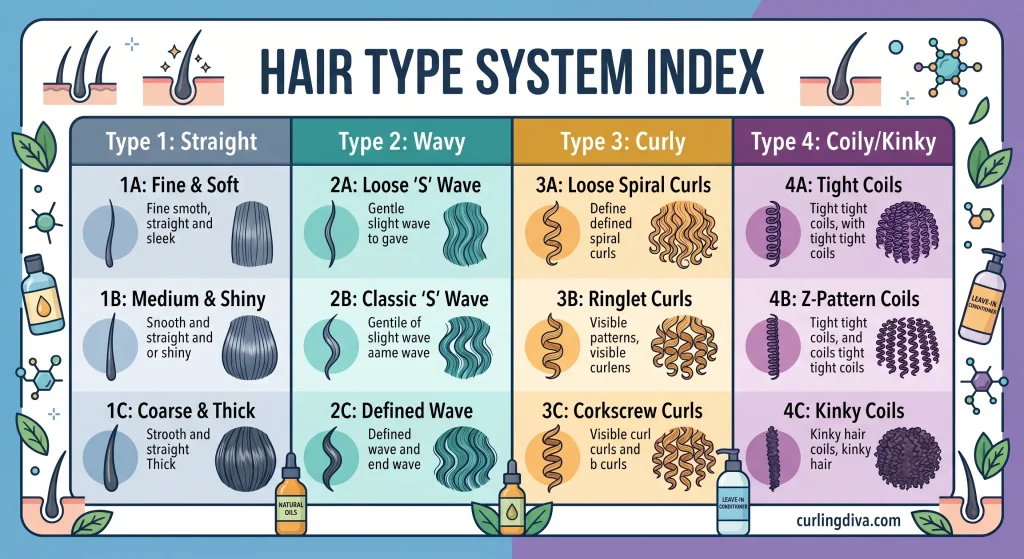
To simplify hair care, the beauty industry relies on a universal hair type chart that categorizes hair into four distinct categories (Types 1 to 4), with sub-categories (A, B, and C) based on the diameter of the wave, curl, or coil.
Type 1: Straight Hair Types
Straight hair has absolutely no visible curl or type of wave. It reflects light easily, making it exceptionally shiny, but it is highly prone to becoming weighed down by excessive oil.
- 1A: Extremely fine hair, thin hair, and very soft. It completely lacks volume and cannot hold a curl.
- 1B: Has a bit more body and density than 1A. It features straight strands but has a slight volume at the roots.
- 1C: Thick hair that is straight but coarse. It resists styling and can occasionally develop a very slight wave when left to hair air dry.
Type 2: Wavy Hair Type
Wavy hair sits gracefully in the sweet spot between straight and curly. It has an “S” shape natural pattern and varies from loose waves to deeply defined waves.
- 2A: Loose waves with a fine hair texture. It lacks volume at the roots and can easily be mistaken for straight hair when wet.
- 2B: Features a more prominent “S” shape type of wave, usually starting from the mid-lengths. It is prone to minor frizzy hair.
- 2C: Thick, distinct waves that begin right at the root. This b hair sub-type borders on loose curls and requires extra moisture to prevent frizz.
Type 3: Curly Hair Type
Curly hair features clear, springy, three-dimensional spiral curls or ringlets.
- 3A: Large, loose curls that are shiny and well-defined, about the width of sidewalk chalk.
- 3B: Springy b curls and tighter ringlets with a medium texture. This type requires regular use of a leave-in conditioner to maintain definition.
- 3C: Densely packed corkscrew curls, often referred to as the c hair type. These tight curls have a lot of natural volume but suffer from significant shrinkage.
Type 4: Coily and Kinky Hair
Coily hair consists of very tight coils and angular zig-zag patterns. It is the most fragile natural hair type because it has fewer cuticle layers to protect the hair shaft.
- 4A: Defined, tight coils with an “S” pattern about the width of a crochet needle.
- 4B: Features a sharp “Z” pattern with less defined coils and more angular, kinky hair strands.
- 4C: Extremely tight coils and zig-zag patterns that may not be visible to the naked eye without close inspection. It experiences up to 75% shrinkage and requires rich natural oils to stay healthy.
Wavy vs Straight Hair: Head-to-Head Comparison
| Feature | Wavy Hair (Type 2) | Straight Hair (Type 1) |
| Follicle Shape | Oval / Elliptical | Perfectly Round |
| Oil Distribution | Moderate; ends tend to get dry | Fast; roots get oily quickly |
| Frizz Vulnerability | High, especially in humidity | Low; struggles with limpness instead |
| Volume Level | Medium to High | Low to Medium |
| Styling Retention | Holds curls and straight styles well | Resists curls; easy to flatten |
How to Determine Your Exact Natural Texture
If you have spent years using heat styling tools or heavy styling products, you might not even know what your true natural shape looks like. Many people with curly-haired parents grow up treating their hair as straight, only to discover a beautiful natural texture later in life!
Here are the different techniques to discover your real hair type:
The Naked Hair Test
The absolute best way to see your real pattern is to observe your hair completely free of products and styling.
- Wash your hair using a gentle, sulfate-free shampoo.
- Skip the heavy masks and leave-in conditioners for this test.
- Gently blot out excess moisture using a microfibre towel or an old cotton t-shirt (never rub with a rough terry cloth towel!).
- Let your hair air dry completely without touching it, combing it, or using heat.
- Once dry, look in the mirror. Do you see straight locks, loose waves, or defined curls?
The Porosity and Density Check
Understanding your hair type involves more than just looking at the surface shape; you also need to know your hair density (how much hair you have per square inch) and hair porosity (your hair’s ability to retain moisture).
To test your hair porosity, take a clean, single strand of hair and drop it into a bowl of water:
- High Porosity: If the strand sinks to the bottom of the bowl of water quickly, your hair shaft cuticles are wide open. It absorbs water fast but loses it just as quickly, requiring a heavier curl cream to lock in moisture.
- Low Porosity: If the strand floats on top of the water for a long time, your cuticles are tightly packed. It resists absorbing moisture, meaning heavy styling products will just sit on the surface and weigh it down.
Comprehensive Care Routine for Straight Hair
Straight hair is prized for its sleek shine and smooth texture, but its biggest enemy is lack of volume and a buildup of excessive oil. Because sebum travels down straight strands so quickly, a specialized hair care routine is necessary.
1. Cleansing and Washing
Because sebum accumulates rapidly on a round hair shaft, straight-haired individuals usually need to wash their hair more frequently than those with textured hair.
- The Routine: Wash every 2 to 3 days using a lightweight, clarifying, or volumizing sulfate-free shampoo. Focus the shampoo strictly on your scalp to eliminate grease.
- Pro-Tip: Apply conditioner only from the mid-lengths to the ends. Applying it to the roots will instantly flatten your hair and trigger grease production.
2. Styling and Detangling
Straight hair is highly prone to showing tangles and split ends.
- Detangling: Use a wide-tooth comb or a paddle brush on wet hair, starting from the tips and working your way up to avoid mechanical breakage.
- Volume Building: If you want to fight flatness, use a lightweight mousse on damp hair at the roots before blow-drying. Avoid heavy serums that create a greasy, plastered look.
- The Secret Weapon: Keep a bottle of high-quality dry shampoo on hand. Spraying it at your roots on non-wash days is a great way to absorb sebum while adding instant texture and lift.
Comprehensive Care Routine for Wavy Hair
Wavy hair requires a delicate balance. It needs enough hydration to encourage a visible curl pattern and prevent frizzy hair, but too much product will weigh the loose waves down, turning them into limp, straight strands.
1. The Ultimate Wash Day Setup
Your wash day routine is crucial for setting up your waves for success.
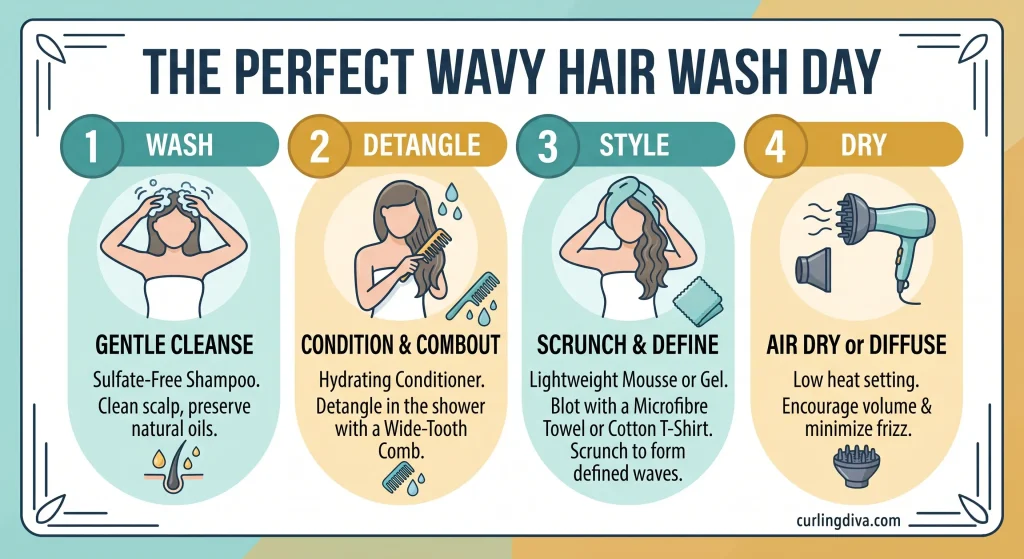
- The Step-by-Step: Wash with a moisturizing sulfate-free shampoo to preserve your natural hair oils. Follow up with a hydrating conditioner, using your fingers to detangle while the conditioner is still in your hair.
- The Rinse: Rinse with cool water to seal the hair shaft cuticles, which enhances shine and calms frizz.
2. Styling for Defined Waves
To get the best results out of your natural waves, you must apply your hair care products while your hair is still soaking wet or damp.
- Step A: While your hair is wet, apply a nickel-sized amount of leave-in conditioner or a lightweight curl cream using the “praying hands” technique to distribute it evenly.
- Step B: Apply a lightweight mousse or a styling gel, then cup your hair in your hands and scrunch upward toward your scalp. This action encourages your natural shape to form.
- Step C: Blot away excess moisture by micro-plopping with a microfibre towel or a cotton t-shirt. Avoid regular towels, as their rough fibers disrupt the wave pattern and create frizz.
3. Drying Techniques
- Air Drying: If you let your hair air dry, avoid touching it while it dries. Touching wet hair breaks up the wave clumps, leading to immediate frizz.
- Diffusing: For maximum volume and bouncy, defined curls, dry your hair using a blow dryer equipped with a diffuser attachment. Tilt your head forward, place your waves into the bowl of the diffuser, and press it gently against your scalp on a low-heat setting.
Avoiding Common Mistakes: What NOT to Do
Whether you are navigating straight locks or experimenting with new hair routines for waves, avoiding these common pitfalls will save your hair from unnecessary damage.
For Straight Hair Types:
- Over-applying Heavy Products: Avoid thick oils, pure shea butter, or heavy styling products. They will leave your thin hair looking stringy and greasy.
- Sleeping with Wet Hair: Straight hair is incredibly vulnerable when wet. Sleeping on it causes friction, leading to severe tangles and breakage by morning.
- Neglecting Heat Protection: Just because straight hair can handle a flat iron easily doesn’t mean it’s immune to damage. Always apply a heat protectant before any heat styling.
For Wavy Hair Types:
- Brushing Dry Hair: Never, ever run a traditional hairbrush through dry wavy hair! This breaks apart the wave structure and instantly transforms your hair into a giant, frizzy cloud.
- Using Heavy Silicones: Non-soluble silicones build up quickly on type 2 hair, stretching out the waves and making them look flat and lifeless. Look for water-soluble alternatives.
- Skipping Regular Trims: Because waves are prone to dryness, the ends split easily. Regular trims keep the hair lightweight, allowing your waves to spring up naturally.
Embracing Your Unique Hair Type
In a world filled with endless beauty trends, it is easy to fall into the trap of wishing for a different hair texture. Straight-haired individuals often spend hours with curling irons trying to create long-lasting volume, while wavy and curly-haired individuals spend years flattening their natural patterns with chemical relaxers and straighteners.
The truth is, every single hair type has its own stunning advantages:
- Straight hair offers unmatched, glass-like shine, effortless sleekness, and incredible ease of management for both long and short hair styles.
- Wavy hair delivers enviable versatility, natural body, and an effortless, beachy volume that can be easily dressed up or down depending on personal preferences.
Learning to care for your own hair is a journey of patience, experimentation, and self-love. When you equip yourself with the right products, master different techniques, and respect your biological hair structure, you will achieve the vibrant, healthy hair you have always dreamed of.
Frequently Asked Questions (FAQs)
Can straight hair turn wavy over time?
Yes, your natural hair type can change throughout your life. Hormonal shifts (such as puberty, pregnancy, or menopause), certain medical treatments, changes in climate, and even aging can alter your hair follicles and affect hair growth, resulting in new hair with a completely different texture.
How often should I wash wavy hair vs straight hair?
Straight hair typically needs to be washed every 2 to 3 days because natural oils travel quickly down the smooth hair shaft. Wavy hair is naturally drier, so washing it 2 to 3 times a week is usually ideal to prevent stripping away the natural hair oils that keep the waves defined and frizz-free.
Why is my hair wavy underneath but straight on top?
This is an incredibly common phenomenon! The top layer of your hair faces the brunt of environmental elements, including sun damage, pollution, wind, and mechanical stress from brushing or heat styling. This exposure can damage the hair shaft and flatten your natural pattern on top, while the protected hair underneath maintains its true type of wave or visible curl.
Does cutting your hair shorter make it more wavy?
For many people, yes! Long hair adds significant weight to your hair strands, which can stretch out loose waves and make them appear straight. Cutting your hair into a short hair style or adding layers removes this heavy weight, allowing your natural waves and b curls to bounce up freely with much more definition.
Can I use curl creams designed for coily hair on my waves?
It is generally not recommended. Products formulated for coily hair or tight coils are packed with heavy, rich ingredients like heavy oils and thick butter to combat severe dryness. Because wavy hair has a finer hair texture, these heavy styling products will overload the hair strands, leaving your waves looking limp, greasy, and completely weighed down. Stick to a lightweight mousse, gel, or fluid curl cream instead for the best results.