
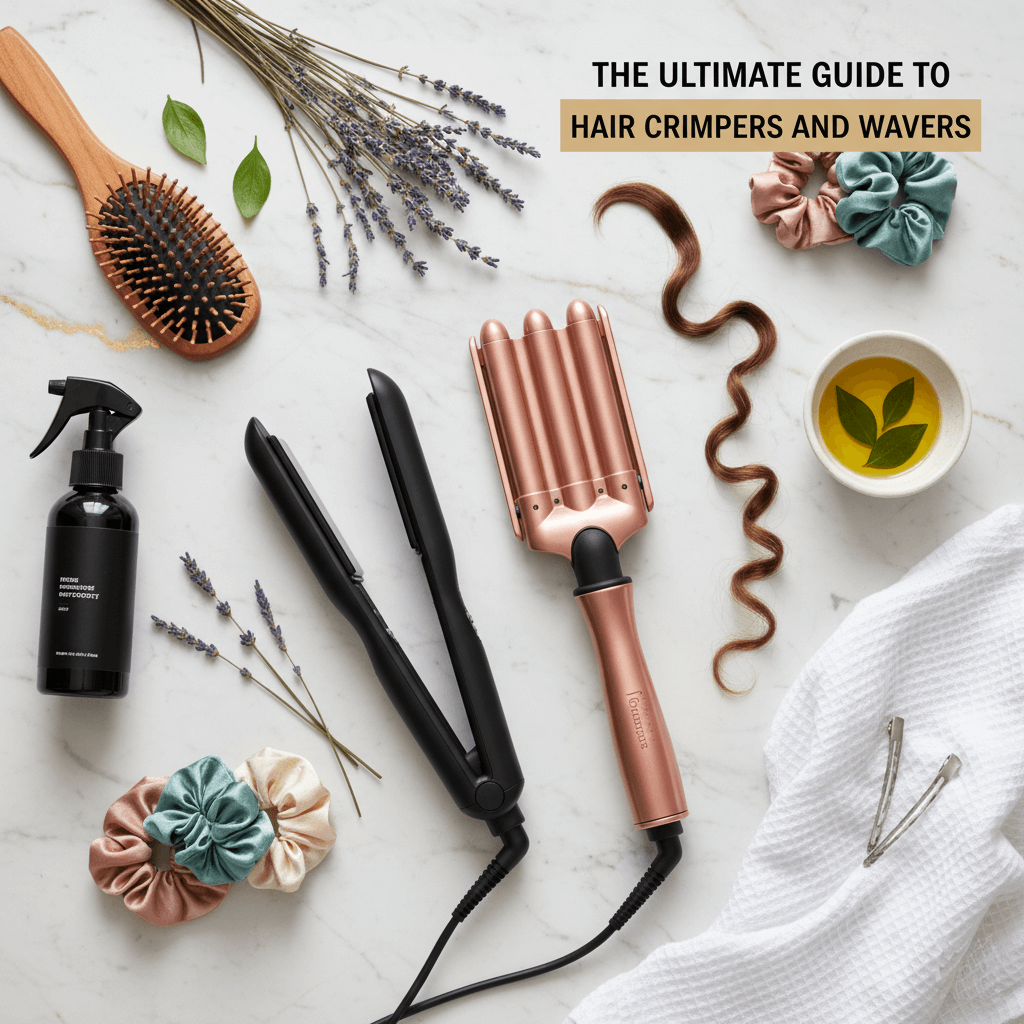
Remember when the hair crimper was the absolute pinnacle of style in the 1990s? If you thought those days were gone, think again. Thanks to Gen Z and TikTok, crimped and waved textures are back with a vengeance—but they’ve had a major glow-up. Gone are the frizzy, electrocuted looks of the past. Today, it’s all about glossy mermaid waves, effortless beachy waves, and targeted volume hacks that professionals have been keeping secret for years.
Whether you have short hair, long hair, fine hair, or thick hair, adding a crimper or waver to your styling arsenal is the fastest way to change your look without a haircut. This comprehensive guide will walk you through everything you need to know: the science of the plates, the best way to choose a tool, and step-by-step tutorials for the hottest styles of the year.
Hair Crimper vs. Hair Waver: What’s the Difference?
Before you buy, it is crucial to understand that while these hot tools look similar, they produce vastly different results.
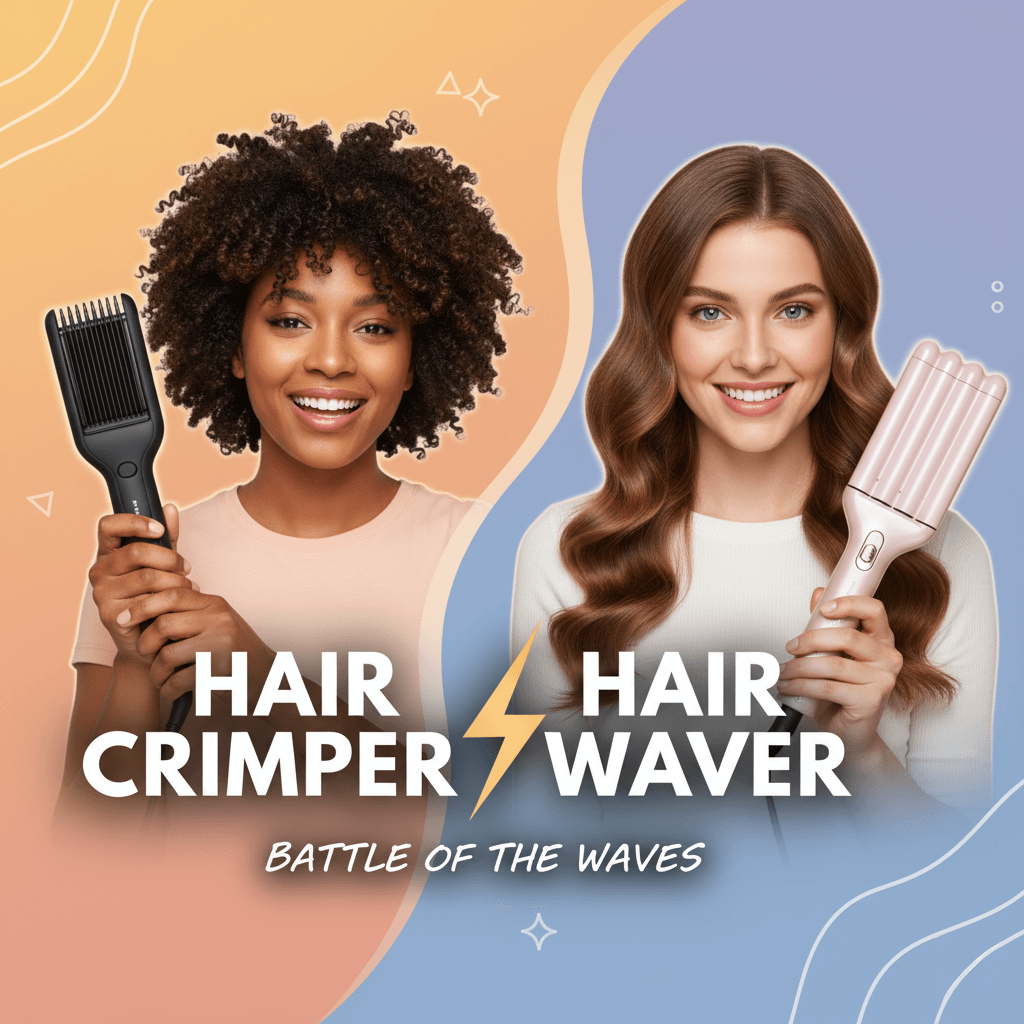
The Hair Crimper
A hair crimper features two plates with small, zigzagged ridges that fit together like puzzle pieces.
- The Look: Creates a tight, angular, zigzag texture.
- Best For: Adding massive volume, retro 90s styles, and—crucially—providing “grip” and lift at the roots for upstyles.
- Key Feature: The size of the plates determines the texture. Micro-crimpers are used for root lift, while wider crimpers create bold fashion statements.
The Hair Waver
A hair waver (often called a mermaid waver) typically consists of three large barrels (a triple barrel waver) or a deep U-shaped mold (deep waver).
- The Look: Creates soft, S-shaped defined waves that look like you just unraveled a set of perfect French braids.
- Best For: Mermaid waves, beachy waves, and covering a entire head of longer hair quickly.
- Key Feature: The barrel curling iron shape is built into a clamp system, making it easier than a traditional wand—you simply clamp and hold.
Hair Waver vs. Curling Iron: Choosing Your Weapon
While crimpers and wavers often get confused, the curling iron is the other titan of the styling world that you might be considering. If you are torn between buying a new barrel curling iron or a trendy waver, here is how they stack up.
The Curling Iron
A classic curling iron (or wand) uses a single cylindrical barrel that you wrap hair around.
- The Look: Creates spirals, ringlets, or bouncy “Hollywood” curls. The shape is 3D and cylindrical.
- Best For: Precision styling, face-framing layers, and versatility. You can create tight ringlets or brush them out for soft volume.
- The Technique: Requires wrapping hair around the barrel and holding. It takes more skill to master the angle and direction of the curl.
The Hair Waver
A hair waver presses the hair between heated plates to mold it into a shape.
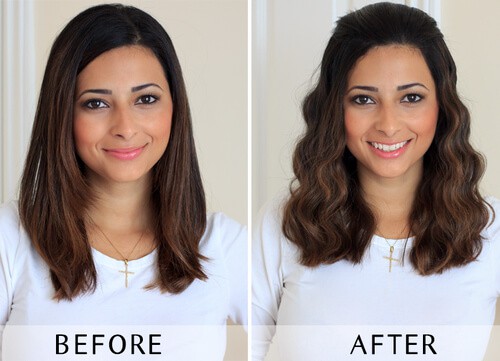
- The Look: Creates a flat, S-shaped “ripple” pattern. The texture is uniform, relaxed, and undeniably “beachy.”
- Best For: Effortless, messy texture and covering a entire head of long hair in record time. It gives that “I woke up like this” vibe that a curling iron often struggles to replicate.
- The Technique: Requires zero twisting or wrapping. You simply clamp, hold, release, and move down. It is virtually fool-proof for beginners.
The Verdict: If you want polished, bouncy glamour, stick with the curling iron. If you want cool-girl, lived-in mermaid waves with half the effort, the hair waver is your new best friend.
Types of Hair Wavers
When searching for hair wavers, you’ll usually find two types of wavers. Each is operated the same way but are differently designed, so they also tend to offer different results. Choosing between the two can define the hairstyles you can create, so it’s important to be able to tell them apart and know what each one is for.
So, what are these two different types of hair wavers? Check them out below:
The Deep Waver
Deep wavers are hair wavers that make use of a single big lump to create pronounced waves in your hair. This lets it create chunky, uniform curls with just a clench of the handle. It’s great for creating voluminous curls and beachy waves, depending on how sleek you intend to style your hair.
The Triple Barrel Waver
The triple barrel waver, on the other hand, is one of the clunkiest heat styling tools there is. As the name suggests, it makes use of three barrels to create the curls you want. One of these barrels is found on one side of the tongs, flanked by two concave plates that are designed to fit the thick prongs found on the other side. When clamped together, the curves will create nice, big curls.
This type of hair wavers is often preferred by those who want to create mermaid curls. As this hairstyle requires pronounced, uniform curls, using three barrels to do it is one of the nicest ways to achieve the ‘do.
Some people might think that the double barrel curling irons are also wavers, but this isn’t the case. There are actually no double barrel wavers because you’ll need three barrels to create even, uniform curls. The double barrel curling tools are just curling rods that will still require you to wrap your hair around the wands, which isn’t how wavers work.
Deep Waver vs Triple Barrel: Choosing the Best Hair Waver Type for Your Needs
If you intend to buy just one kind of hair waver, choosing between these two can be pretty tricky. Both has its own style to offer, as noted above, so choosing just one relies entirely on the style you want to create. Deep wavers can be the best hair waver for beach waves, as it offers really large waves. You just need to brush it out to soften the curls, tousle your hair a little, and maybe spray a little salt water texturizer on your locks and you’re good to go.
If you’re not too particular about the definition of the waves you want to have, your hair length and your hair styling skill level should help you make the right choice for you. These two things have a great impact on how you can use the tool, which is also an important thing to consider when buying a heat styling tool. It shouldn’t just be about the results because if you can’t use the tool, there’s no way you can achieve the curls it promises you to have.
The Science of Plates: Ceramic vs. Titanium vs. Tourmaline
Not all hot tools are created equal. The material of your crimping iron or waver affects the health of your hair shaft and the longevity of your style.
Ceramic Plates
Ceramic plates are the gold standard for most users. They heat up evenly from the inside out (infrared heat), which is gentler on the hair cuticle.
- Best For: Fine hair, dry hair, or damaged hair. If you are prone to heat damage, ceramic is your safest bet to avoid frying your wet strands (though you should never style wet hair!).
Titanium Plates
Titanium is a lightweight metal that heats up instantly and maintains very high, intense temperatures.
- Best For: Coarse hair, thicker hair, and professional use. If your hair struggles to hold a curl or is very resistant, titanium provides the power needed to set the structure.
- Warning: Because they get so hot, they can cause damage quickly if you don’t use a heat protectant spray.
Tourmaline Technology
Tourmaline is a crystal often crushed and infused into ceramic plates. It emits natural negative ions when heated.
- Best For: Fighting frizz. The negative ions seal the hair cuticle, locking in moisture and making your mermaid waves look glossy rather than puffy.
Size Matters: Choosing the Right Barrel
If you are shopping for a waver, you will likely see sizes like 25mm and 32mm. Here is how they change the look:
- The 25mm Barrel: This creates a tighter, more defined wave. It leans closer to a “crimp” look and provides immense volume. This is often the best idea for short hair or shoulder-length bobs (the “Boho Bob”).
- The 32mm Barrel: The “Jumbo” waver. This creates loose, languid, flowing waves. This is the tool used for the viral TikTok mermaid hair trend. It requires longer hair to really show off the pattern.
Step-by-Step Tutorial: The Viral “Mermaid Waves”
This is the style taking over social media. It works best on medium to long hair.
What You Need:
- 32mm (Jumbo) Hair Waver
- Heat protectant spray
- Sectioning clips
- Texture spray or light hair spray
The Process:
- Prep: Start with completely dry hair. Never use hot tools on damp hair. Spray a generous amount of heat protectant spray throughout your entire head.
- Section: Divide your hair into four large sections: two at the bottom (left and right) and two at the top. Clip the top sections away.
- The First Clamp: Start with a section of hair about 2 inches wide. Clamp the waver near the root (but not touching the scalp). Hold for 5-8 seconds.
- The Align: This is the secret to perfect waves. When you release the clamp, slide the tool down. Place the first barrel of the tool directly over the last wave indentation you just made. This ensures the wave pattern is continuous and seamless.
- Continue: Work your way down the hair shaft to the ends. Leave the last inch of your ends straight for a modern, beachy finish.
- Cool Down: Let the waves cool completely. Do not touch them while they are warm!
- Finish: Once cool, rake your fingers or a wide-tooth comb through the waves to break them up slightly. Mist with a texturizing hair spray for that “lived-in” look.
Step-by-Step Tutorial: The Root Volume Hack (Using a Crimper)
If you have flat, fine hair, this is the industry secret for massive volume without teasing.
Check out this video on how to use a crimper to get a root lift:
What You Need:
- A mini crimping iron (or a standard one with small ridges)
- Tail comb
- Clips
The Process:
- Section the “Lid”: Use your tail comb to section off the top layer of your hair (the part everyone sees) around your part line and crown. Clip this up tight. This is your “lid” that will hide the crimping.
- Crimp the Under-Layers: Take a thin section of hair from the layer underneath the one you just clipped up.
- The Tap: Clamp the crimper at the very root of this section, close to the scalp. Hold for 2-3 seconds. Do not crimp the entire length. You only want to crimp the first 1-2 inches from the root.
- Release: Release the clamp. You will see a zigzag texture at the root that stands up on its own.
- Cover: Unclip your top “lid” layer and let it fall over the crimped roots.
- The Result: The crimped texture acts like a scaffold, holding up your top layer of hair and giving you volume that lasts for days.
Step-by-Step Tutorial: The Boho Bob (For Short Hair)
Styling short hair with large tools can be tricky, but the Deep Waver is perfect for this.
What You Need:
- Deep Waver or 25mm Triple Barrel Waver
- Sea salt spray
The Process:
- Prep: Apply a light mousse to damp hair and blow-dry it straight.
- Angle is Key: Unlike long hair where you hold the tool horizontally, for short hair, you might find it easier to tilt the tool slightly to follow the curve of your head.
- Small Bites: Work in smaller sections than you would with long hair.
- Start Lower: Don’t start the wave right at the root, or your bob will look triangular (poofy at the top). Start the wave at eye level.
- The Ends: It is vital to leave the ends straight on short hair to avoid a “poodle” look.
- Finish: Spritz with sea salt spray and scrunch the ends for a messy, chic finish.
Buying Guide: What to Look for in a Tool
When shopping for your styling arsenal, keep these features in mind:
- Adjustable Heat Settings: This is non-negotiable.
- Fine/Chemically Treated Hair: Keep it below 300°F (150°C).
- Normal Hair: 300°F – 380°F (150°C – 190°C).
- Thick/Coarse Hair: 350°F – 450°F (180°C – 230°C).
- Safety Shut-Off: We’ve all had that “did I leave the straightener on?” panic. Look for tools that turn off automatically after 60 minutes.
- Swivel Cord: A 360-degree swivel cord prevents the wire from tangling as you maneuver around your head.
- Dual Voltage: If you plan to travel, ensure your tool can handle international voltage.
Pro-Tips for Preventing Heat Damage
Heat styling is fun, but heat damage is forever. Protect your mane with these rules:
- The One-Pass Rule: Aim to get the wave right on the first try. Going over the same section of hair multiple times multiplies the damage.
- Cool Down: Let the hair cool in the shape you want. If you pull on the hair while it’s hot, you straighten out the wave you just created.
- Moisturize: Frequent heat users should use a deep conditioning mask once a week to replenish the hair shaft.
FAQs
Q: Can I use a crimper or waver on wet hair?
A: Absolutely not. Using these tools on wet or even damp hair will cause the water inside the hair shaft to boil and explode, leading to “bubble hair” and irreversible breakage. Always dry your hair 100% before styling.
Q: How do I make my waves last on straight hair?
A: Texture is your friend. Dirty hair holds style better than clean hair. If you just washed, use a mousse before drying and a texturizing spray before waving. Use a smaller barrel (25mm) as the waves will drop slightly over time.
Q: Can I create waves with a flat iron instead?
A: Yes, but it requires more technique. You have to manually bend the flat iron up and down the hair shaft to create the “S” shape. A hair waver is much faster and delivers more consistent results for the entire head.
Q: Is a 3-barrel waver heavy?
A: Some models can be heavy. If you have weak wrists or very thick hair that takes a long time to style, look for a “compact” or “mini” waver, or choose a tool with a titanium barrel as they tend to be lighter than ceramic.
Q: Does crimping damage hair more than curling?
A: Potentially. Because a crimping iron presses texture into the hair with significant pressure, it can be harsh. However, because you typically clamp and hold rather than dragging the plates down the hair (like a straightener), you avoid mechanical friction damage. Always use heat protectant spray.
Q: How do I clean my waver?
A: Product buildup can ruin the plates. Once the tool is completely cool and unplugged, wipe the plates with a soft, damp cloth. For stubborn residue, a little rubbing alcohol on a cotton pad works wonders.
Whether you are looking to channel your inner 90s pop star with a bold crimp or achieve those effortless California beachy waves, the right tool makes all the difference. By choosing the correct size of the plates, mastering the temperature, and prepping with the right products, you can achieve salon-quality texture right at home.